
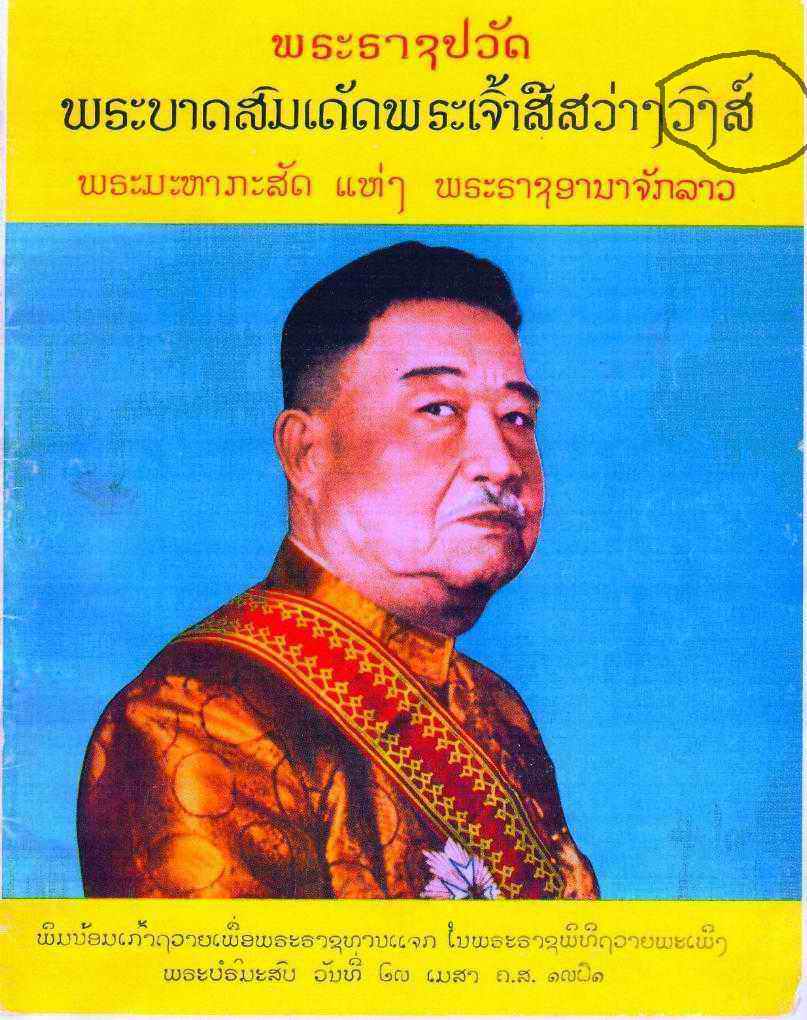
Sisavang Vong
Last ruler of Luang Prabang and founding king of Laos under French protection.

via Wikipedia: Sisavang Vong · see source
- field
- Monarchy
- nationality
- Lao
- known_for
- Last ruler of Luang Prabang; founding king of the Kingdom of Laos
Verified Timeline
Lore & Background
He studied at the Lycée Chasseloup-Laubat in Saigon and later at the École Coloniale before returning to ascend the throne. During his early reign, the French built his residence, the Royal Palace of Luang Prabang.
Reader's Guide
Sisavangvong's significance lies in his role as the last ruler of Luang Prabang and the first king of a unified Kingdom of Laos, a position he held under French colonial authority. His 55-year reign saw the unification of several provinces and the construction of a new royal palace. Statues of him remain in Luang Prabang and Vientiane, showing him giving the people a constitution, symbolizing his role in achieving independence from the French Union.
Did You Know?
- He was born Prince Khao and took the courtesy name Sisavangvong in keeping with Lao tradition.
- His reign lasted 55 years, during which he ruled over Luang Prabang and Laos.
- Statues of Sisavangvong survive in Luang Prabang and Vientiane, showing him giving the people a constitution.
A Young Heir in a Colonial Court
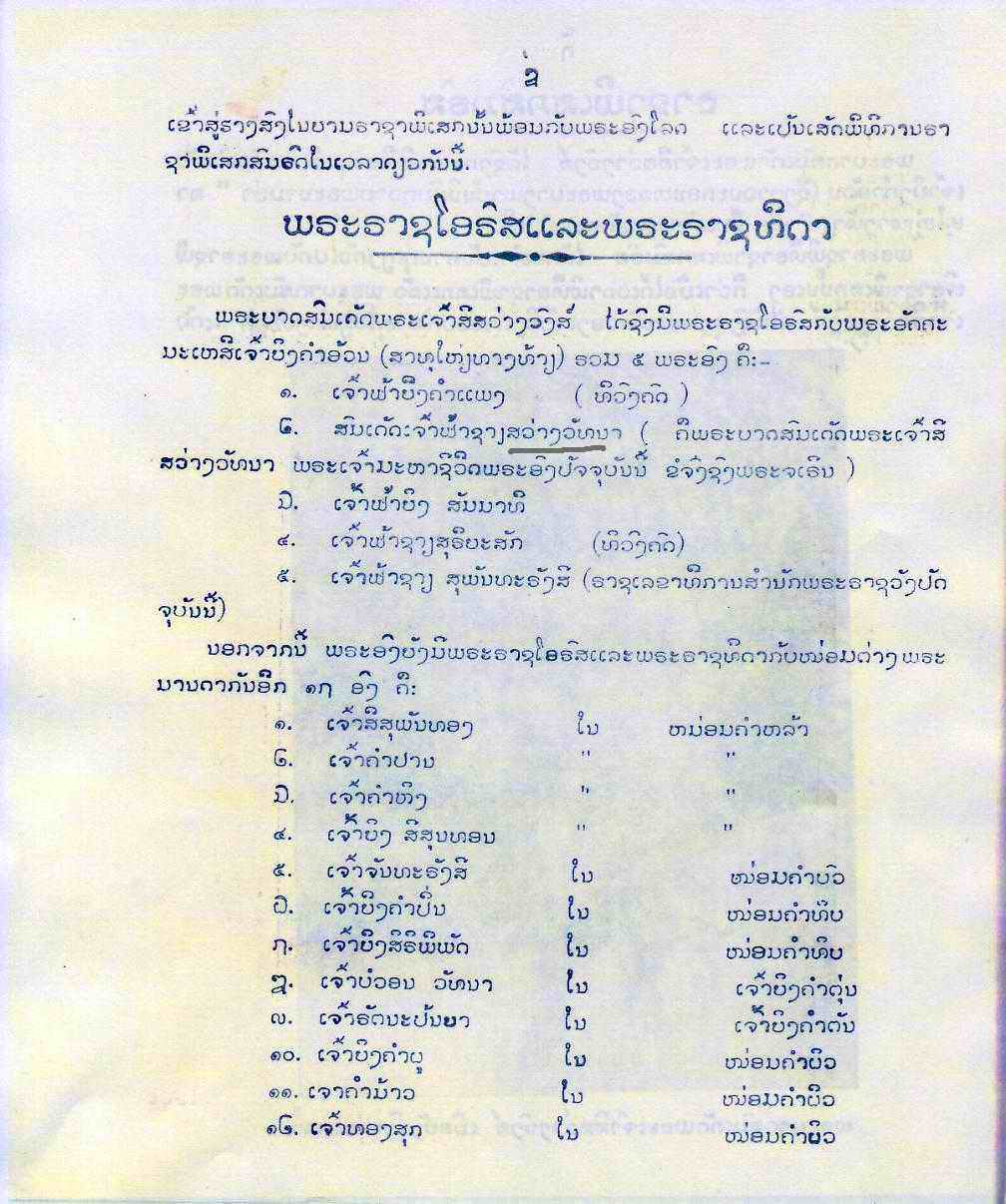
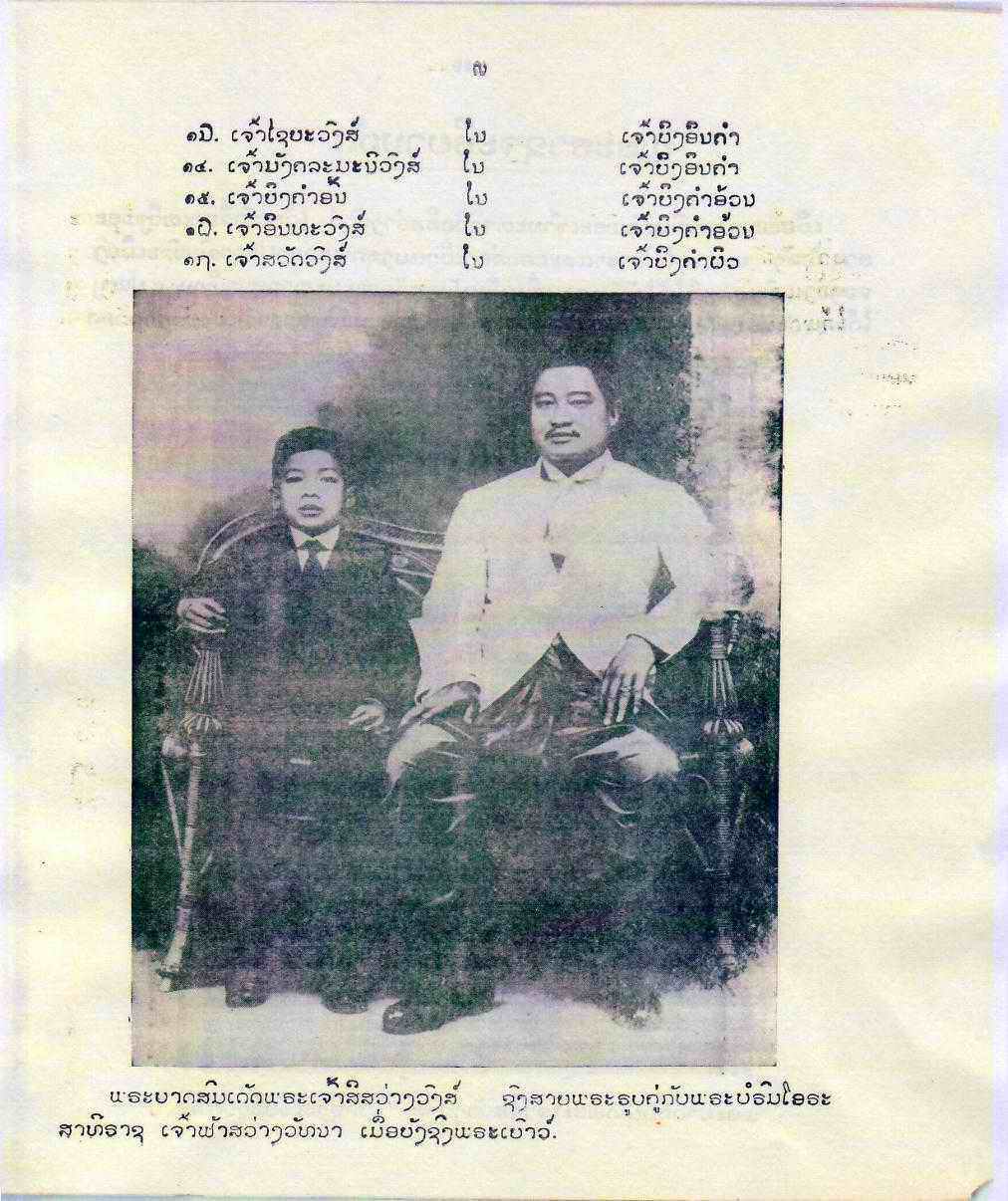
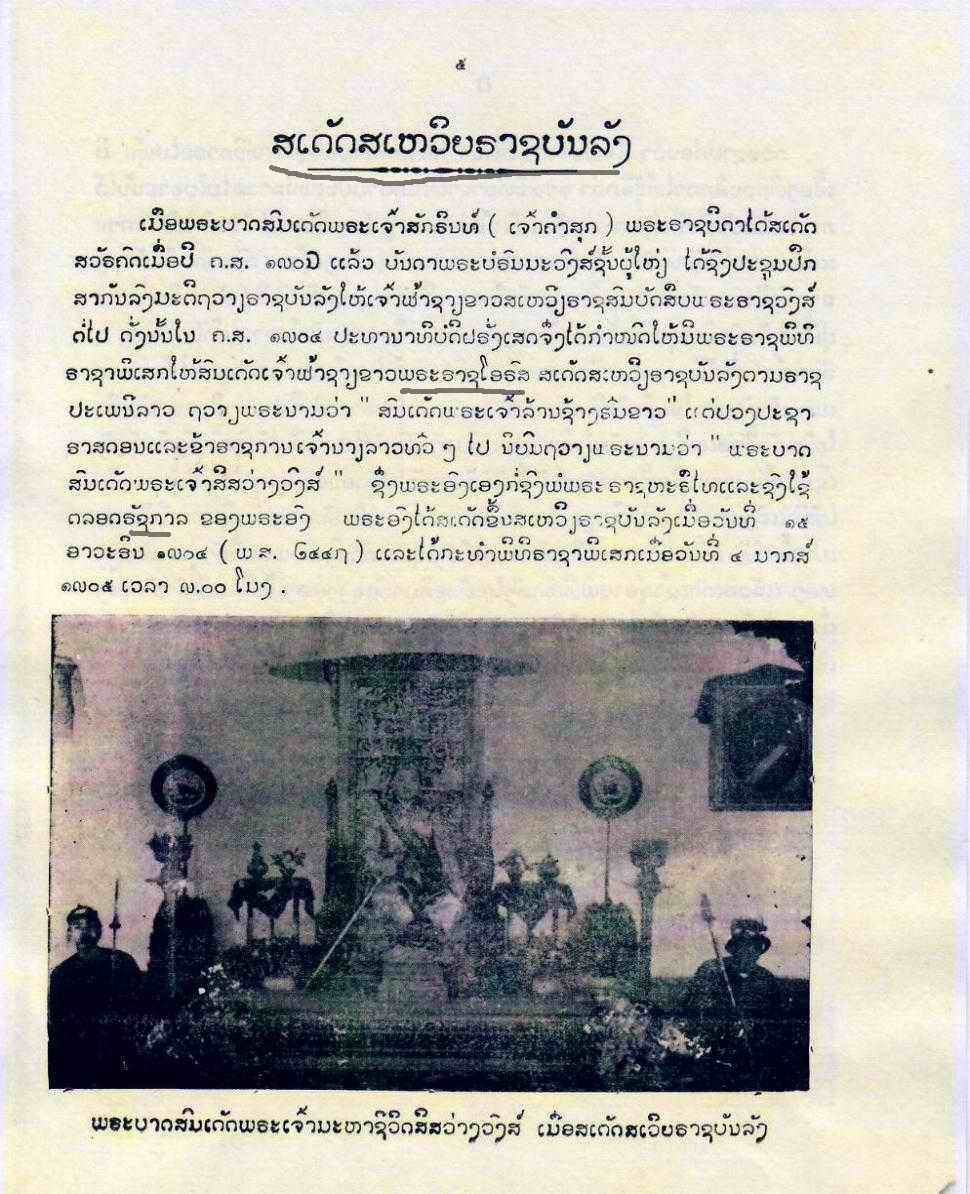
Prince Khao entered the world on 14 July 1885 within the Golden Palace of Luang Prabang, the eldest surviving son of King Zakarine and Queen Consort Thong-sy. His formative years were shaped by the French colonial presence that governed his father's kingdom. Rather than remaining in the capital, the young prince was sent to study at the Lycée Chasseloup-Laubat in Saigon and subsequently at the École Coloniale, immersing himself in the administrative and educational systems of the colonial power. When King Zakarine died on 26 March 1904, Khao was named heir apparent on 15 April 1904. At just eighteen, he ascended the throne at the Old Royal Palace and was formally crowned King Sisavangvong on 4 March 1905, adopting the courtesy name in accordance with Lao royal tradition. His early residence at the Royal Palace of Luang Prabang was itself a French-built structure, a constant reminder of the colonial framework within which his sovereignty operated.
Forging a Unified Laos
One of Sisavang Vong's most consequential achievements was the gradual consolidation of disparate Lao territories under a single crown. Beginning in 1931, he brought Houaphan under his authority, followed by the incorporation of Houakhong, Xiengkhouang, and Vientiane in 1942. The final major addition came in 1946, when Champassak and Sayboury joined the realm. This slow, decades-long process culminated in a historic milestone: for the first time in nearly 250 years, a Lao monarch governed the entire territory that would become modern Laos. The unification was not merely administrative; it laid the groundwork for a shared national identity and positioned the kingdom as a coherent political entity. Sisavang Vong also undertook the construction of a new royal palace during his reign, symbolizing the growing stature of the unified court. His role in granting a constitution, as depicted in surviving statues, further underscored his vision of a modern sovereign state emerging from the remnants of colonial fragmentation.
The 1945 Dethronement and Restoration
The final years of French colonial authority in Southeast Asia brought a dramatic crisis to Sisavang Vong's throne. Throughout his reign, the king had consistently aligned himself with the French administration, and in 1945 he refused to collaborate with Lao nationalist movements. When the Lao Issara declared the nation's independence and established a Japanese-backed puppet state, Sisavang Vong found himself briefly ruling under that arrangement before being dethroned by the nationalists for his pro-French position. His removal represented a profound rupture in the continuity of Lao monarchy. However, the political landscape shifted rapidly: by April 1946, the French had reasserted control over Laos and restored him to the throne. His reinstatement was not merely a personal vindication; it marked the first occasion in roughly a quarter of a millennium that a Lao king held authority over the whole of the Lao lands, transforming his rule from a regional sovereignty into a genuinely national one.
A Reign's End and Enduring Memory
Sisavang Vong's fifty-five-year reign came to a close with his death on 29 October 1959. In his final months of illness, he had appointed his son, Crown Prince Savang Vatthana, as regent, ensuring a smooth succession. The king's remains were cremated and interred at Vat That Luang in Luang Prabang in 1961, in a state funeral of remarkable scale. The procession featured a royal funeral carriage and a twelve-metre-high wooden hearse adorned with a carved seven-headed snake, a nod to Lao spiritual symbolism. Dignitaries from across the region attended, including Prince Bhanubandhu Yugala representing Thailand. His legacy endured even through political upheaval: Sisavangvong University was established in his honour, though it closed in 1975 under the new communist government. Yet statues of the king in both Luang Prabang and Vientiane survived the revolution, depicting him bestowing a constitution upon his people—a lasting image of his role in steering Laos toward independence from the French Union.
Gallery
Frequently Asked Questions
What was Sisavang Vong's role as monarch?
As king, he served as the head of state of Laos while the country operated under French colonial administration. His authority was largely ceremonial, and he consistently backed French governance throughout his long reign.
Why is Sisavang Vong important in Lao history?
He is significant as the last king of the old Luang Prabang kingdom and the founding monarch of the modern Kingdom of Laos, bridging the transition from a traditional Lao monarchy to a French-protected state.
More in Monarchs And Rulers Of Asia 1-20
Spotted an error? Know more?
This is a living reference — every entry is fact-audited, and reader corrections feed straight into our audit queue. Suggest an edit · See this site's audit record