
Yongzheng Emperor
Fourth Qing emperor who reformed government and formed the Grand Council.

via Wikipedia: Yongzheng Emperor · see source
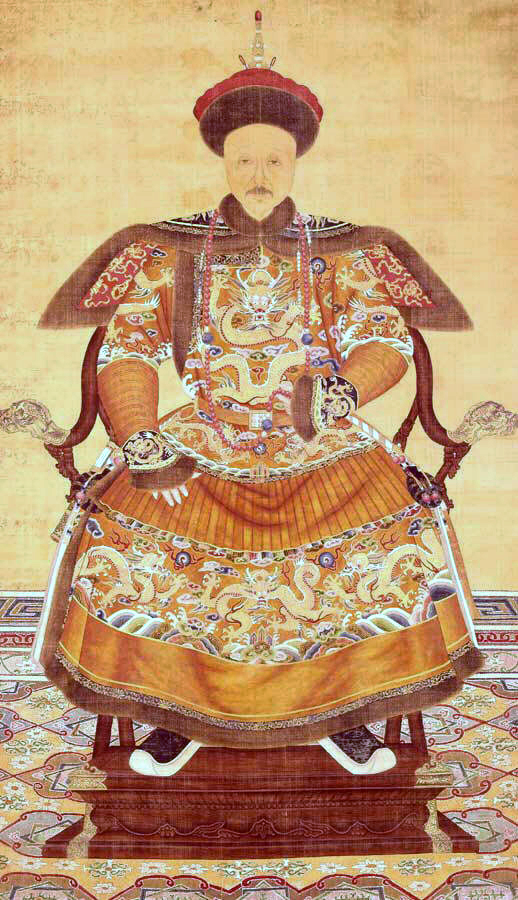
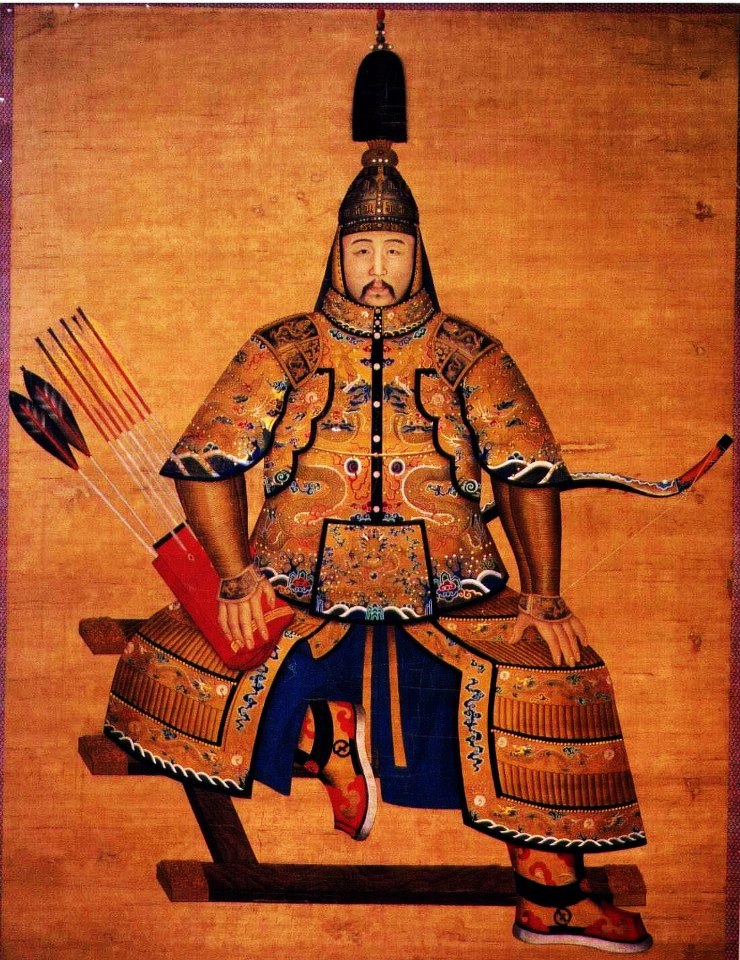
The Yongzheng Emperor (13 December 1678 – 8 October 1735), personal name Yinzhen, was the fourth emperor of the Qing dynasty, and the third Qing emperor to rule over China proper. A hard-working ruler, he aimed to create a more effective government, cracked down on corruption, and reformed personnel and financial administration. His reign saw the formation of the Grand Council, an institution that had a major impact on the future of the dynasty. Militarily, he continued his father's efforts to consolidate Qing's position in Outer Mongolia and Tibet through force. Although his reign was much shorter than that of both his father and his son, the Yongzheng era achieved important reforms, but is also considered by many to be authoritarian, with some describing him as a benevolent despot while others note that autocratic policies went too far.
- born
- 13 December 1678
- died
- 8 October 1735
- field
- Emperor of the Qing dynasty
- nationality
- Qing Empire (Manchu)
- known_for
- Reforms in personnel and financial administration, formation of the Grand Counci
Lore & Background
Yinzhen was the eleventh recorded son of the Kangxi Emperor, and the fourth prince to survive into adulthood. His mother, historically known as Empress Xiaogongren, was originally a court attendant from the Manchu Uya clan. Around the time when Yinzhen was born, his mother was of low status and did not have the right to raise her own children. For most of his childhood, Yinzhen was raised by Noble Consort Tong, the daughter of Tong Guowei, the Kangxi Emperor's maternal uncle. She died when Yinzhen was just 9 years old and his education was then put into the care of Imperial Noble Consort Quehui, the younger sister of the late Empress. Yinzhen accompanied his father on several inspection trips around the Beijing area, as well as one further south. He became the honorary leader of the Plain Red Banner during the Battle of Jao Modo between the Qing Empire and the Mongol Dzungar Khanate led by Galdan Khan. Yinzhen was made a beile in 1689 along with several brothers and promoted to junwang (second-rank prince) in 1698. In 1709, the Kangxi Emperor stripped his second son Yinreng of his position as crown prince. In the same year, the Kangxi Emperor promoted Yinzhen from junwang to qinwang (first-rank prince) under the title 'Prince Yong of the First Rank'. Yinzhen maintained a low profile during the initial stages of the succession struggle. He supported Yinreng and earned the trust of his father.
Reader's Guide
The Yongzheng Emperor's reign, though shorter than his father's and son's, achieved important reforms that stabilized the Qing dynasty. He cracked down on corruption, reformed personnel and financial administration, and institutionalized the Grand Council in 1733, which allowed Qing to relay communication effectively and efficiently from region to region, thereby enabling the implementation of his domestic reform policy. His domestic reforms included reconstructing canals and irrigation systems to support agriculture and maintain farmlands. During famines, he provided relief to the affected regions by distributing resources. He issued an imperial decree to emancipate slaves under his reign. One of the several tax reform policies Yongzheng introduced was to shift the head taxation to the property taxation on landowners, which greatly reduced the tax burden on civilians. Additionally, Yongzheng supported the construction of orphanages to shelter orphans, building elementary schools to educate children, and poorhouses to house paupers. A notable quote from Yinzhen captured during his reign expresses his imperial will: 'If it is a trivial matter, do not just simply neglect the issue because it seems insignificant. If it is a complex matter, do not just simply conceal away the issue because it could become a challenge. To have good governance and dissuade seditionists, is all in the ruler's wish.' However, his rule is considered authoritarian, with some describing him as a benevolent despot and others noting autocratic policies went too far. His era served as a remediation to the people, and resentments began to gradually decrease. Hence the Yongzheng era was a peaceful and prosperous reign of Qing China.
Did You Know?
- Yinzhen was the eleventh recorded son of the Kangxi Emperor, but the fourth prince to survive into adulthood.
- He was raised by Noble Consort Tong until age 9, then by Imperial Noble Consort Quehui, because his mother was of low status and did not have the right to raise her own children.
- He became honorary leader of the Plain Red Banner during the Battle of Jao Modo against the Mongol Dzungar Khanate led by Galdan Khan.
- In 1709, he was promoted to qinwang (first-rank prince) under the title 'Prince Yong of the First Rank' after the crown prince Yinreng was deposed.
- He institutionalized the Grand Council in 1733, which improved communication and policy implementation across the empire.
Early Life and Formative Years
Yinzhen entered the world on 13 December 1678 as the eleventh recorded son of the Kangxi Emperor, though he was only the fourth of the emperor's princes to survive past childhood. His mother, Empress Xiaogongren of the Manchu Uya clan, held such a low station at the time of his birth that she was not permitted to raise him herself. Noble Consort Tong, the daughter of the emperor's maternal uncle Tong Guowei, assumed the role of his primary caretaker until her death when Yinzhen was just nine years old. His education then fell under the care of Imperial Noble Consort Quehui. Unlike many imperial households, the Kangxi Emperor deliberately exposed his sons to the wider world. Yinzhen accompanied his father on inspection tours around the Beijing region and on a journey further south. He even served as honorary leader of the Plain Red Banner during the Battle of Jao Modo against the Dzungar Khanate under Galdan. He received the rank of beile in 1689 and was elevated to junwang, a second-rank prince, by 1698.
The Succession Struggle
In 1709 the Kangxi Emperor made a sweeping decision: he stripped his second son Yinreng of the crown prince title the heir had held his entire life. With a total of twenty-four adult sons competing for favor, the vacancy ignited a fierce and prolonged rivalry. Yinzhen, who had been elevated to qinwang—first-rank prince—under the title Prince Yong of the First Rank that same year, deliberately kept a low profile during the early phases of the contest. The court's popular choice for a new heir was the emperor's eighth son, Yinsi, backed by the majority of officials and many of the other princes. Yet Kangxi rejected this candidate, largely because Yinsi's growing political influence at court began to eclipse the emperor's own authority. Sensing his father's inclination to reinstate Yinreng, Yinzhen threw his support behind the deposed heir and thereby earned the deep trust of the Kangxi Emperor. This cautious, loyal positioning ultimately set the stage for Yinzhen's own ascension to the throne in 1723.
Governance and Institutional Reform
Once on the throne, Yongzheng threw himself into what contemporaries and later historians alike describe as an extraordinarily hard-working reign. His central ambition was to build a more effective government, and he pursued this through sweeping crackdowns on corruption and comprehensive overhauls of both personnel and financial administration. A cornerstone of his institutional legacy was the Grand Council, formally institutionalized in 1733, which streamlined communication across the empire and gave the emperor a powerful mechanism for implementing domestic policy. Under his direction, canals and irrigation systems were reconstructed to bolster agriculture, and famine relief was dispatched to affected regions. In his own words, he insisted that trivial matters should not be neglected for their smallness and complex ones should not be concealed for their difficulty. He demanded four qualities from his officials—loyalty, fairness, sincerity, and capability—and held up figures like Li Wei as models of those virtues. His overarching vision was a Confucian moral government in which a judicious, people-centered court would naturally dissuade sedition.
Legacy and Historical Assessment
Yongzheng died on 8 October 1735 at the age of fifty-six, and the throne passed to his fourth son, who would reign as the Qianlong Emperor. Though his eleven-year reign was considerably shorter than those of both his father and his son, the Yongzheng era left a mark that extended far beyond its brief span. The Grand Council he institutionalized continued to shape Qing governance for generations, and his military campaigns consolidated the dynasty's hold over Outer Mongolia and Tibet. Yet his historical reputation remains deeply contested. Many scholars acknowledge the substance of his reforms while simultaneously describing his rule as authoritarian. Some characterize him as a benevolent despot whose strictness served the public good, while others argue that his autocratic policies crossed a line into excessive control. This tension—between genuine administrative achievement and heavy-handed governance—has made Yongzheng one of the most debated figures in Qing history, a ruler whose legacy is inseparable from the question of how much power a single emperor should wield.
Gallery
Frequently Asked Questions
Who is the Yongzheng Emperor?
The Yongzheng Emperor, born Yinzhen in 1678, was the fourth emperor of China's Qing dynasty and the third Manchu ruler to govern all of China. He took the throne in 1722 after a long and contentious succession struggle among his father Kangxi's sons.
What were the Yongzheng Emperor's powers and role?
As emperor, he held absolute authority over the Qing state, commanding the military, appointing officials, and setting fiscal policy. He centralized decision-making by creating the Grand Council, a small inner body of trusted advisors that handled sensitive state business directly under his direction.
How did the Yongzheng Emperor's story end?
He died suddenly on 8 October 1735 at the Ningshou Mountain hunting lodge, just months into the new year. His death was unexplained and has long fueled speculation, though no definitive cause was ever recorded.
Why is the Yongzheng Emperor important in Asian history?
His decade-long reign introduced sweeping reforms to tax collection, land registration, and official accountability that stabilized Qing finances after a period of widespread corruption. The Grand Council he established became the empire's most powerful administrative body for the next two centuries.
What is the Yongzheng Emperor most known for?
He is remembered as a fiercely diligent and authoritarian ruler who personally reviewed thousands of memorials each day and cracked down hard on corrupt provincial officials. His legacy is that of a workaholic reformer who modernized Qing bureaucracy at the cost of a harsh, suspicious temperament.
More in Monarchs And Rulers Of Asia 1-20
Spotted an error? Know more?
This is a living reference — every entry is fact-audited, and reader corrections feed straight into our audit queue. Suggest an edit · See this site's audit record