
Sultan Agung of Mataram
Third Sultan of Mataram, conqueror and administrative reformer.

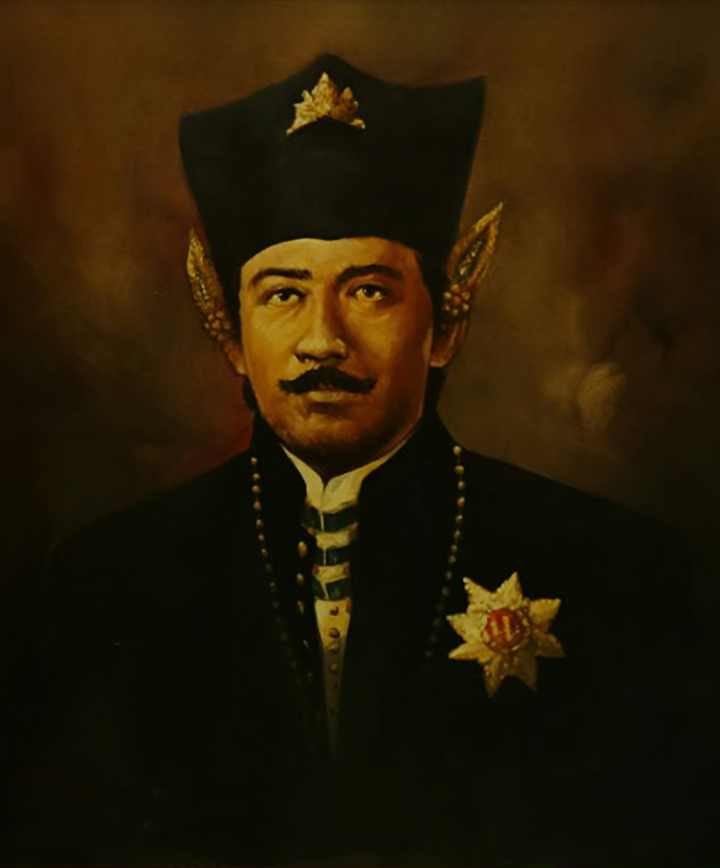
Firzafp · CC BY-SA 4.0
He was a skilled soldier who conquered neighboring states, expanding and consolidating his kingdom to its greatest territorial and military power. He is subject to substantial literature due to his legacy as a Javanese ruler, a fighter against the incursions of the Dutch East India Company, a conqueror, and his existence within a cultural framework where myth and magic intertwine with verifiable historical events.
- Field
- Monarchy, military conquest, administration
- Nationality
- Javanese (Mataram)
- Known for
- Expanding Mataram to its greatest extent; resisting Dutch East India Company; administrative reforms; Javanese calendar
Lore & Background
Sultan Agung, born Rangsang, ascended to the throne at age 20, succeeding his half-brother Duke Martapura, who ruled for only one day. He is commonly considered the third sultan. In his second year, Patih Mandaraka died and was replaced by Tumenggung Singaranu. Agung's reign was marked by extensive territorial conquests. His empire then encompassed central and eastern Java plus Madura, except the west end and mountainous south. He later campaigned against Balinese controlling Balambangan, succeeding in Java but not extending power to Bali.
Reader's Guide
Sultan Agung's significance lies in his unification of most of Java under Mataram, creating the largest Javanese empire of the era. His administrative reforms were a major legacy: he created a provincial structure with adipati (dukes) heading kadipaten (duchies), particularly in western Java. This structure was later retained by the Dutch East India Company, with adipati becoming bupati and kadipaten becoming kabupaten, a system that persists in modern Indonesia. He reformed the tax code and brought the judicial system more in line with Quranic precepts. He commissioned the Karta Palace and the Royal Graveyard of Imogiri, which remains the resting place of Javanese royalty. Culturally, he established the Bagongan language standard for court officials, is attributed with founding the unique Javanese calendar, and wrote the mystical manuscript Sastra Gending. The development of sacred dance bedhaya and advances in gamelan and wayang are attributed to his court, though historical evidence is scarce.
Did You Know?
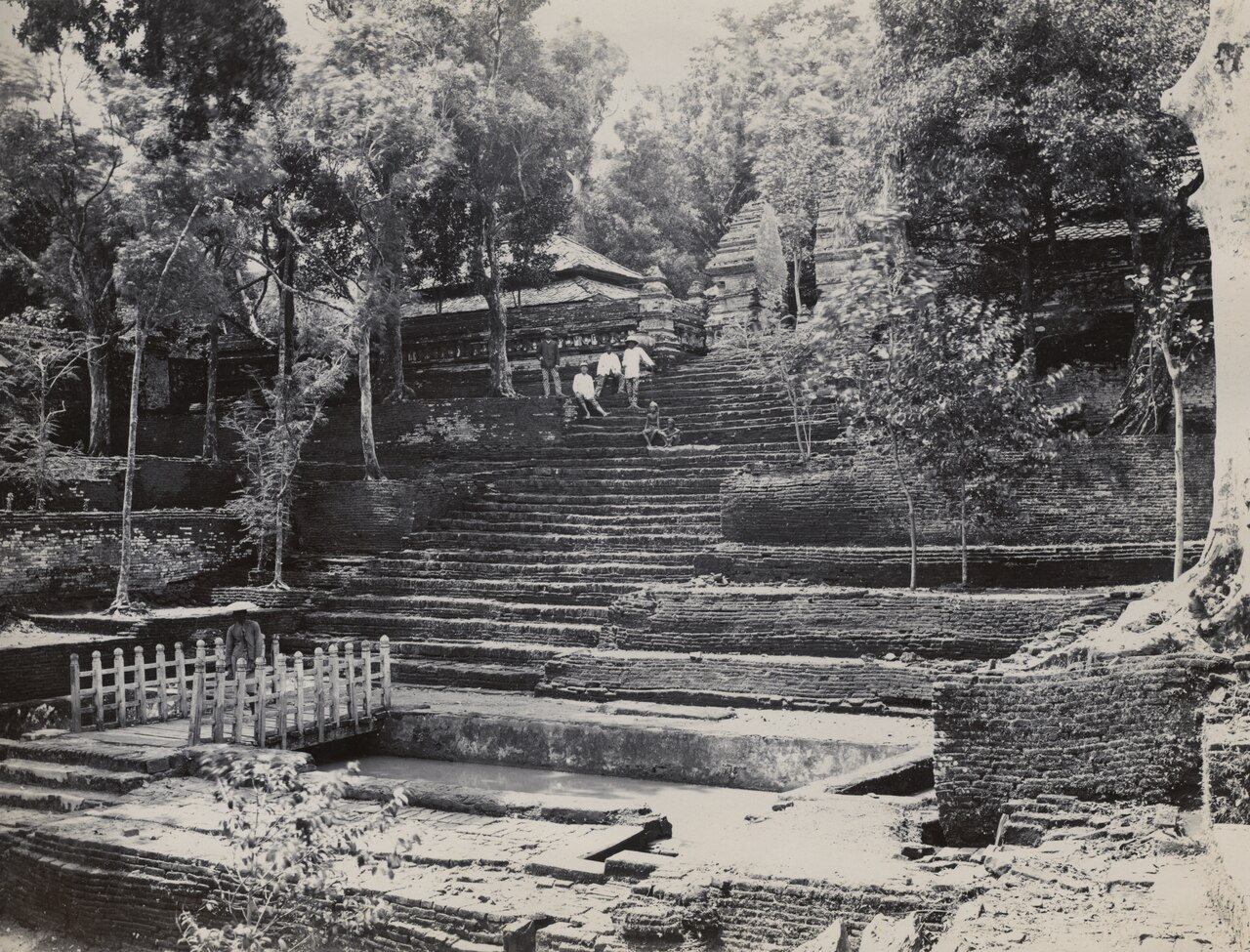
- He built the Royal Graveyard of Imogiri, which remains the resting place of most royalty from Yogyakarta and Surakarta.
- The Dutch literature referred to him as 'Agoeng de Grote' (Agung the Great).
- He is attributed with founding the unique Javanese calendar, still in use.
The Gunpowder Empire at Its Zenith
During the early seventeenth century, the Sultanate of Mataram stood as one of the most formidable polities in the entire Indonesian archipelago. Based on the island of Java and stretching from the late 1500s into the 1700s, the kingdom reached its absolute zenith under Sultan Agung Anyokrokusumo, who ruled from 1613 to 1645. At that height, Mataram's dominion covered the vast majority of mainland Java as well as the island of Madura, while distant vassal states in Palembang, Sukadana, and Jambi acknowledged its overlordship. Historians have grouped Mataram alongside Aceh and Makassar as one of Southeast Asia's great gunpowder empires, a designation that underscores the scale of its military and political reach. The name Mataram itself was never an official state title; Javanese people simply called their realm Bhumi Jawa or Tanah Jawi, meaning the Land of Java. The term instead points to the plains south of Mount Merapi, around present-day Muntilan, Sleman, and Prambanan, with the capital at Kota Gede on the outskirts of what is now southern Yogyakarta. This geographic metonymy, common in Javanese tradition, distinguishes the Islamic sultanate from the older ninth-century Hindu-Buddhist kingdom that once occupied the same region.
Conquering Surabaya and Forging Supremacy
The wealthy port city of Surabaya had long resisted Mataram's expanding authority. Back in 1586, the young Panembahan Senapati launched a campaign along the Solo River toward the east, but Surabaya's defenses proved impenetrable to his forces. Undeterred, Senapati pivoted to conquer Madiun, then pushed through Kediri and Ponorogo, reaching as far as Pasuruan, where the threat alone may have coaxed the powerful Surabayan rulers into easing their pressure. He also compelled Cirebon and Galuh in West Java to accept Mataram's overlordship in 1595, though his 1597 attempt on Banten failed, possibly for lack of adequate water transport. The challenge of Surabaya thus remained an open wound in Mataram's eastern frontier for nearly three decades. It was Sultan Agung Anyokrokusumo, ruling from 1613 to 1645, who finally brought the prosperous and fiercely independent state of Surabaya under Mataram's control. That conquest eliminated the kingdom's most powerful rival and cemented Agung's reign as the high-water mark of Mataram's territorial and political power. The achievement completed a strategic arc that Senapati had begun but could not finish, transforming a fragmented collection of Javanese polities into a unified, dominant force on the island.
The Long Unraveling After Agung's Death
Sultan Agung's death in 1645 did not immediately shatter his empire, but it set in motion a slow unraveling spanning generations. His successors struggled to hold the vast territory he had assembled. The crisis peaked in 1677 when a Madurese prince revolted, his forces sacked the royal court, and Susuhunan Amangkurat I died in exile. His son, Amangkurat II, made a fateful decision: he turned to the Dutch East India Company for military aid to restore his throne. The VOC obliged, establishing a pattern that would haunt Mataram for the rest of its existence. Dispossessed princes would repeatedly invoke VOC armed power in return for payment and favorable treaties, and with each invocation the kingdom ceded more of its political and economic sovereignty. The First and Second Javanese Wars of Succession further fractured the state and shrank its territory. The devastating Chinese Rebellion of 1741 compelled Pakubuwono II to hand over sovereignty of the Pasisir coast to the VOC. The Third Javanese War of Succession then split the realm into the Sultanate of Yogyakarta and the Surakarta Sunanate, with the VOC brokering that division. After the Java War of 1825 to 1830, both states were demilitarized and absorbed into the Dutch East Indies.
A Dynasty That Endures in Modern Indonesia
Despite the political fragmentation that followed the Dutch colonial period, the Mataram dynasty has never lost its cultural and political weight in the modern era. In the critical early days of Indonesian independence, Susuhunan Pakubuwono XII and Sultan Hamengkubuwono IX were among the very first monarchs of the Dutch East Indies to formally recognize the newly declared Republic of Indonesia, lending royal legitimacy to a young nation. That gesture of allegiance proved consequential. Today, the Sultanate of Yogyakarta stands as the only monarchy officially recognized by the Indonesian government. Its sovereigns hold a unique constitutional status: they serve as lifelong Governors of the autonomous province of Yogyakarta, a position that is not elected but inherited. This arrangement is a direct thread connecting the court at Kota Gede, the capital of the old sultanate on the outskirts of southern Yogyakarta, to the modern political landscape. The descendants of the Mataram line thus occupy a singular position in Indonesian life, bridging the world of early modern Javanese statecraft with the constitutional framework of a contemporary republic. Their influence extends well beyond ceremonial roles, touching on governance, culture, and the collective memory of Javanese identity.
Gallery


Frequently Asked Questions
What are Sultan Agung's main achievements and role?
He is remembered as a conqueror who expanded Mataram to its greatest territorial and military extent by subduing neighboring states. Beyond warfare, he pursued administrative reforms and is credited with changes to the Javanese calendar.
Why is Sultan Agung important in Asian history?
He represents the high-water mark of Mataram's power as a unified Javanese state and a symbol of resistance against European colonial encroachment. His dual identity as a military leader and an administrative reformer makes him a central figure in Javanese historiography.
What was Sultan Agung's conflict with the Dutch East India Company?
During his reign he actively fought against VOC incursions into Mataram territory, positioning himself as a defender of Javanese sovereignty. This struggle is one of the primary reasons he continues to occupy a prominent place in both historical scholarship and popular Javanese culture.
More in Monarchs And Rulers Of Asia 1-20
Spotted an error? Know more?
This is a living reference — every entry is fact-audited, and reader corrections feed straight into our audit queue. Suggest an edit · See this site's audit record